

Why Choose LED Face Masks for Clearer Skin
Glowing, youthful skin often feels out of reach when acne and signs of aging take center stage. For many British and Canadian women striving for visible results without leaving home, choosing the right solution can be daunting. LED face masks have gained attention for their non-invasive technology and clinical trials demonstrating up to 340 percent improvement in skin elasticity, making them a promising choice for those seeking science-backed improvement in both acne and aging concerns.
Table of Contents
Key Takeaways
| Point | Details |
| LED Face Masks Utilize Light Therapy | They use specific wavelengths to target various skin concerns such as acne, aging, and hyperpigmentation. |
| Different Light Colors Serve Unique Purposes | Red, blue, green, and near-infrared lights provide distinct benefits, from collagen production to acne treatment. |
| Safety and Certification Are Crucial | Ensure devices are FDA-cleared or CE-certified and follow safety guidelines for effective use. |
| LED Masks Offer Non-Invasive Alternatives | Compared to other skincare tools, LED masks provide a gentler method with minimal skin trauma and long-term improvements. |
What Are LED Face Masks and How They Work
LED face masks are innovative skincare devices that harness the power of light therapy to transform skin health. These advanced tools use specific wavelengths of light to penetrate different skin layers, targeting various skin concerns with precision. Light therapy technologies operate through a scientific process called photobiomodulation, which stimulates cellular responses and promotes healing.
At their core, LED face masks work by emitting different color wavelengths that interact with skin cells in unique ways. Each color serves a distinct purpose:
-
Red Light (630-660 nm): Stimulates collagen production, reduces inflammation, and promotes healing
-
Blue Light (415-495 nm): Targets acne-causing bacteria and helps regulate sebum production
-
Green Light (495-570 nm): Helps reduce hyperpigmentation and improve skin tone
-
Near-Infrared Light (810-850 nm): Penetrates deepest, supporting cellular repair and reducing inflammation
The science behind these masks draws from medical research originally developed by NASA, which discovered light’s remarkable ability to accelerate tissue repair. Professional-grade LED therapy uses more intense light energy compared to at-home devices, but home masks still offer significant benefits when used consistently.
How LED Masks Penetrate Skin Layers:
-
Light wavelengths are absorbed by skin cells
-
Cellular mitochondria convert light energy into cellular fuel
-
Increased cellular energy triggers regenerative processes
-
Skin begins natural healing and rejuvenation
LED face masks represent a non-invasive approach to skincare that leverages the body’s natural healing mechanisms through targeted light frequencies.
Pro tip: Start with shorter treatment sessions and gradually increase duration to allow your skin to adapt to light therapy, typically beginning with 10-minute sessions 2-3 times per week.
Different Types and Light Wavelengths Explained
LED face masks utilize sophisticated light technology, with each color wavelength delivering targeted skin benefits. Light therapy wavelengths range from blue to near-infrared, each penetrating skin at different depths and producing unique cellular responses. Understanding these wavelengths is crucial for selecting the most effective LED mask for specific skin concerns.
The primary light wavelengths used in professional and at-home LED masks include:
-
Blue Light (415-495 nm):
-
Targets acne-causing bacteria
-
Helps regulate sebum production
-
Ideal for oily and acne-prone skin
-
-
Red Light (630-660 nm):
-
Stimulates collagen production
-
Reduces inflammation
-
Promotes healing and skin rejuvenation
-
-
Green Light (495-570 nm):
-
Helps reduce hyperpigmentation
-
Improves overall skin tone
-
Supports lymphatic drainage
-
-
Near-Infrared Light (810-850 nm):
-
Penetrates deepest into skin layers
-
Supports cellular repair
-
Reduces inflammation at deeper levels
-
Professional LED devices typically offer more intense and precise wavelength configurations compared to at-home masks. Wavelength specificity determines the effectiveness of light therapy, with high-quality masks clearly specifying their light parameters to ensure optimal skin treatment.
The effectiveness of LED face masks depends not just on the presence of light, but on the precise wavelengths and energy levels used during treatment.
Advanced LED mask technologies now combine multiple wavelengths, allowing users to customize treatments for comprehensive skin health. Some cutting-edge devices include programmable settings that target specific skin concerns by sequencing different light wavelengths.
Pro tip: Consult with a dermatologist to determine which light wavelengths best address your specific skin concerns before investing in an LED face mask.
Clinical Benefits for Acne and Anti-Aging
LED face masks have emerged as a powerful non-invasive solution for addressing multiple skin concerns, offering clinically proven benefits for both acne management and anti-aging treatments. Clinical trials demonstrate remarkable improvements in skin health, with some studies showing up to 340% enhancement in skin elasticity and texture.
For individuals struggling with acne, LED therapy provides targeted treatment through specific light wavelengths:
-
Blue Light Therapy:
-
Kills acne-causing bacteria
-
Reduces inflammation
-
Helps control sebum production
-
Minimizes active breakouts
-
-
Red Light Therapy:
-
Reduces inflammation
-
Promotes healing of existing acne lesions
-
Supports skin regeneration
-
Prevents future breakout formation
-
In the anti-aging domain, LED masks offer significant scientific advantages. Skin rejuvenation studies confirm that consistent red light exposure stimulates collagen production, effectively addressing multiple signs of aging:
-
Reduces fine lines and wrinkles
-
Improves skin elasticity
-
Enhances overall skin tone
-
Supports natural cellular repair processes
Professional dermatological research validates LED light therapy as a scientifically credible approach to non-invasive skin improvement.
Understanding individual skin characteristics remains crucial, as results can vary based on device quality, treatment frequency, and personal skin conditions. Consistent and proper use is key to achieving optimal outcomes with LED face mask technologies.
Pro tip: Photograph your skin before starting LED treatments to track subtle improvements and maintain a consistent treatment schedule for best results.
Safety, Certification, and At-Home Use Guidelines
Ensuring safe and effective LED face mask use requires understanding key safety protocols and regulatory standards. LED mask safety guidelines emphasize the importance of proper usage, regulatory compliance, and individual skin sensitivity.
Critical safety considerations include:
-
Regulatory Compliance:
-
Seek FDA-cleared or CE-certified devices
-
Check manufacturer’s clinical testing documentation
-
Verify device meets international safety standards
-
-
Personal Safety Precautions:
-
Wear protective eyewear during treatments
-
Avoid use if sensitive to light
-
Start with shorter treatment sessions
-
Monitor skin for any adverse reactions
-
Key safety guidelines for at-home LED mask use:
-
Read manufacturer instructions thoroughly
-
Perform a patch test before first use
-
Clean device after each treatment
-
Maintain recommended treatment duration
-
Stop use if skin irritation occurs
Dermatologist recommendations highlight the importance of understanding individual skin characteristics and potential limitations of at-home devices. Professional-grade masks typically offer more intense treatments compared to consumer products.
Safety and proper usage are paramount when incorporating LED light therapy into your skincare routine.
Medical contraindications exist for certain individuals, including those with:
-
Active skin infections
-
Open wounds
-
Severe skin disorders
-
Photosensitivity conditions
-
History of skin cancer
Certification matters. Look for devices with:
Here’s a quick reference to certification and safety standards for LED mask shoppers:
| Certification Type | What It Ensures | Who Oversees |
| FDA Clearance | Device safety in the U.S. | U.S. Food & Drug Administration |
| CE Mark | Compliance across Europe | European regulatory authorities |
| Third-Party Testing | Independent safety results | Accredited testing laboratories |
-
FDA clearance
-
Third-party testing documentation
-
Transparent wavelength specifications
-
Comprehensive user guidelines
Pro tip: Consult with a healthcare professional before starting LED light therapy, especially if you have pre-existing skin conditions or are taking photosensitizing medications.
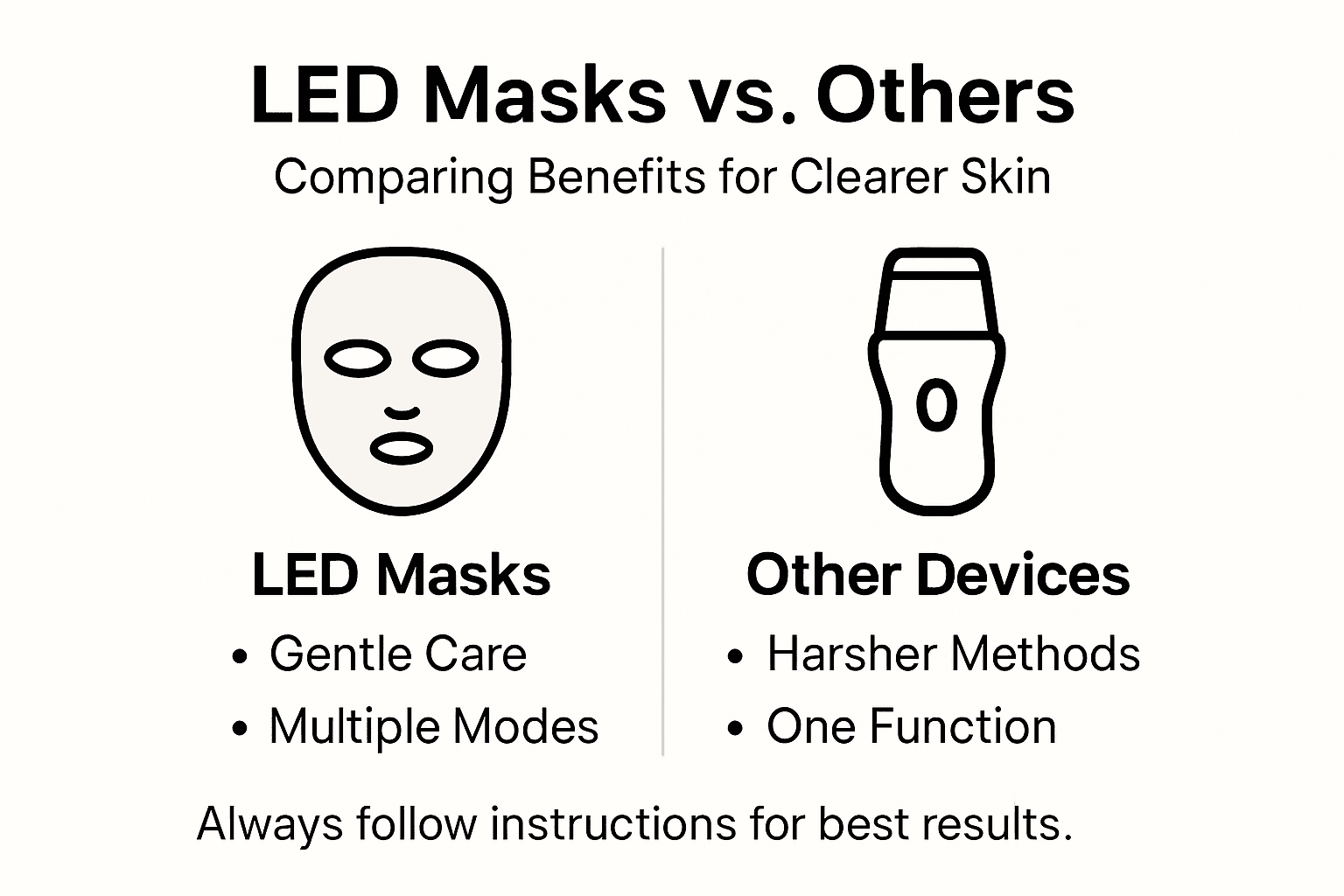
Comparing LED Masks to Other Skincare Devices
Skincare technology offers multiple approaches to addressing skin concerns, with LED masks emerging as a unique, non-invasive solution. Comparative skincare device analysis reveals significant advantages of LED technology over traditional treatments.
Key differences between LED masks and alternative skincare devices include:
-
Mechanical Exfoliation Devices:
-
Physically remove dead skin cells
-
Potential for skin irritation
-
Immediate but temporary results
-
Higher risk of micro-abrasions
-
-
LED Light Therapy:
-
Non-invasive biological stimulation
-
Triggers cellular regeneration
-
Minimal skin trauma
-
Cumulative long-term improvements
-
-
Chemical Peels:
-
Use acid-based solutions
-
Require professional application
-
Potential for significant skin sensitivity
-
Limited treatment frequency
-
-
Microneedling Tools:
-
Create controlled skin punctures
-
More invasive procedure
-
Requires longer recovery time
-
Higher potential for infection
-
Skincare technology comparisons demonstrate that LED masks provide a gentler alternative with less risk and more consistent results. Unlike invasive procedures, these devices work by stimulating natural skin healing processes without external chemical or mechanical intervention.
This table compares commonly used skincare devices to help users quickly assess which may best suit their needs:
| Device Type | Approach | Recovery Time | Ideal For |
| LED Face Mask | Light-based, non-invasive | None | Sensitive, aging, acne-prone skin |
| Chemical Peel | Acid application | 1-7 days | Uneven tone, texture concerns |
| Microneedling Tool | Micro-injury, invasive | Several days | Deeper wrinkles, scarring |
| Mechanical Exfoliator | Physical abrasion | None to minor | Dullness, mild roughness |
LED face masks represent a scientifically backed, low-risk approach to skin rejuvenation compared to more aggressive skincare treatments.
Understanding the unique benefits of LED technology helps users make informed decisions about their skincare routine. Comprehensive treatment approaches often combine multiple technologies for optimal results.
Pro tip: Integrate LED mask treatments gradually into your skincare routine, complementing rather than replacing existing methods for comprehensive skin health.
Discover Clearer Skin with Advanced LED Technology from Lumilux
If you are seeking a safe and effective way to combat acne and promote youthful skin, LED face masks offer a promising solution. This article highlights how specific light wavelengths like blue and red can target acne-causing bacteria, reduce inflammation, and boost collagen production. At Lumilux, we specialize in professional-grade, CE-certified PDT LED devices designed for at-home use. Our products combine science-backed technology with user-friendly design to deliver visible skin improvements that match your desire for clearer, healthier skin.
Take control of your skincare routine now and experience the benefits of dermatologist-inspired LED therapy right at home. Browse our full selection of advanced LED masks and complementary solutions on Lumilux to start your journey toward radiant skin today. Don’t wait to unlock the power of targeted light therapy tailored to your unique skin needs.
Frequently Asked Questions
What are LED face masks and how do they work?
LED face masks are skincare devices that use light therapy to improve skin health. They emit specific wavelengths of light that penetrate skin layers, stimulating cellular responses for healing and rejuvenation.
What are the different wavelengths of light used in LED face masks?
LED face masks typically use blue, red, green, and near-infrared light. Each color has distinct benefits: blue light targets acne, red light stimulates collagen production, green light reduces hyperpigmentation, and near-infrared light supports deeper cellular repair.
Are LED face masks safe for at-home use?
Yes, LED face masks can be safe for at-home use when following manufacturer guidelines. Ensure the device is FDA-cleared or CE-certified, and perform a patch test to check for skin sensitivity.
How do I choose the right LED face mask for my skin type?
Consider your specific skin concerns when choosing an LED face mask. If you struggle with acne, opt for one that includes blue light. For signs of aging, a mask with red light can be beneficial. Consulting a dermatologist can help you make informed decisions.