

Facelift Solutions – Non-Invasive LED Therapy Benefits
Choosing the right solution for youthful, radiant skin can feel confusing when new options keep appearing. Many women in European countries want to address the first signs of aging without resorting to surgery or time-consuming procedures. This guide focuses specifically on where LED light therapy fits among the non-invasive options available today, how it compares to radiofrequency, ultrasound, EMS and dermal fillers, and why light-based treatment is often the gentlest place to start. Discover how scientific innovation is making radiant, healthy skin more accessible than ever.
Table of Contents
- Facelift And Necklift Defined Clearly
- Types Of Facelifts: Surgical Versus Non-Invasive
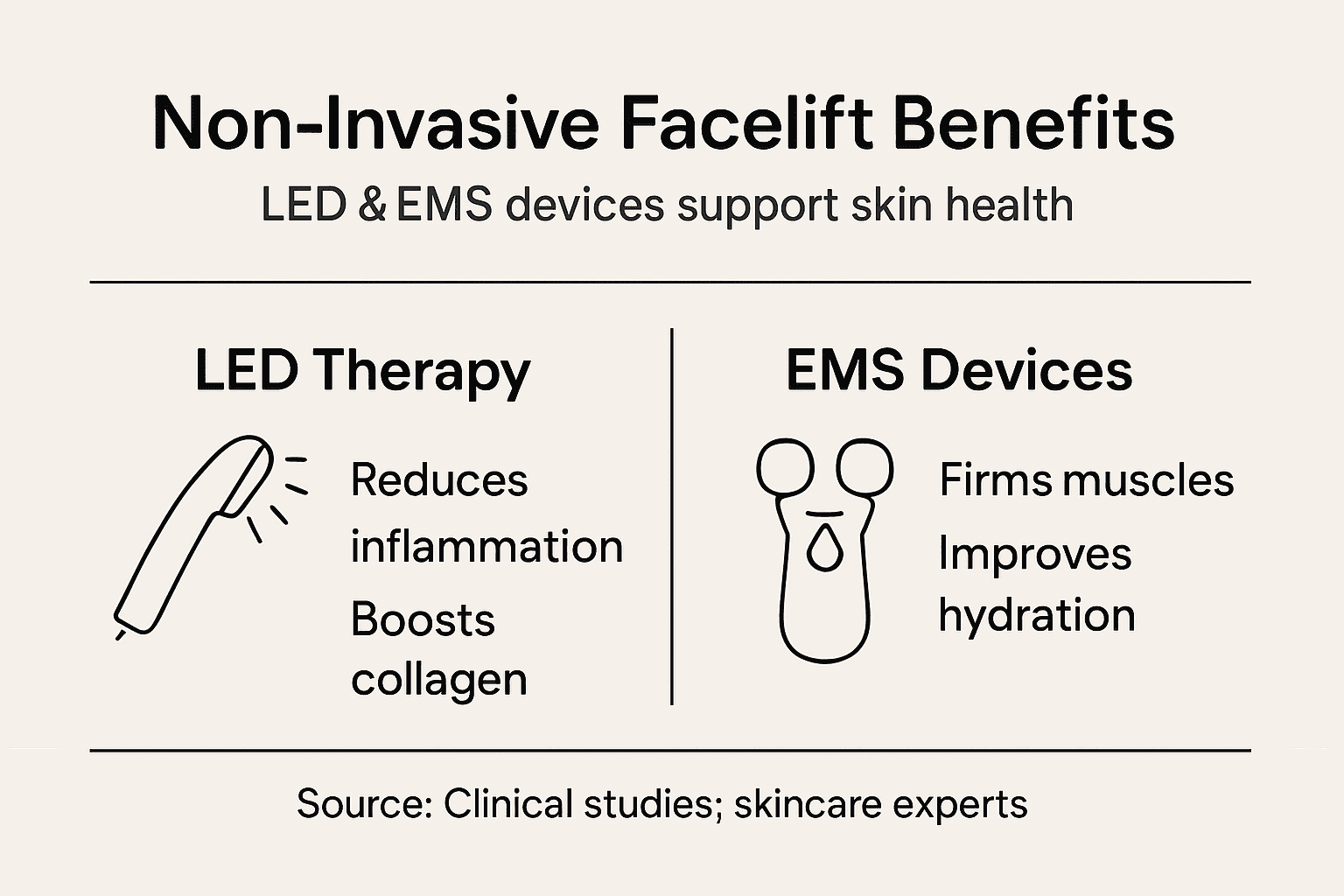
- How Led And Ems Devices Rejuvenate Skin
- Safety, Costs, And Legal Device Standards
- Common Mistakes And Effective Usage Tips
Key Takeaways
| Point | Details |
|---|---|
| Understanding Procedures | Facelift and necklift procedures can be surgical or non-invasive, targeting signs of ageing and restoring youthful contours. |
| Consultation Importance | Always consult a qualified aesthetic professional to determine the most suitable rejuvenation strategy based on individual needs. |
| Non-Invasive Benefits | Non-invasive techniques offer less downtime and temporary results, making them appealing for preventative measures against ageing. |
| Where LED Fits | Unlike RF, ultrasound or EMS, LED light therapy uses no heat or electrical stimulation, making it the gentlest non-invasive option and a good starting point or ongoing maintenance layer alongside other treatments. |
| Safety and Regulations | Ensure any home-use aesthetic device has the appropriate safety certifications and evidence of effectiveness before purchase. |
Facelift and Necklift Defined Clearly
Facelift and necklift procedures represent advanced aesthetic interventions designed to counteract visible signs of facial and neck aging. These techniques aim to restore youthful contours and address soft-tissue changes that occur naturally with time. Understanding these treatments requires exploring their fundamental approaches and technological innovations.
Modern aesthetic medicine offers multiple strategies for rejuvenation, with contemporary approaches focusing on precise anatomical manipulation. The primary objectives of these procedures include:
- Repositioning sagging facial tissues
- Reducing visible wrinkles and fine lines
- Redefining jawline and neck contours
- Improving overall facial symmetry
- Restoring volume in key facial zones
The techniques vary significantly between surgical and non-invasive methods. Surgical facelifts involve direct manipulation of facial musculature, typically addressing the superficial musculoaponeurotic system (SMAS) layer. In contrast, non-surgical interventions leverage advanced technologies like radiofrequency, ultrasound, and LED therapy to stimulate collagen production and skin tightening. This article concentrates on the LED end of that spectrum, and where it sits relative to the others.
Understanding facial anatomy is crucial for selecting appropriate rejuvenation strategies. Different facial regions require tailored approaches, considering factors like skin elasticity, muscle structure, and individual aging patterns. Modern practitioners combine multiple techniques to achieve natural, comprehensive results.
Pro Tip: Always consult a qualified aesthetic professional who can assess your unique facial structure and recommend personalised rejuvenation strategies.
Types of Facelifts: Surgical Versus Non-Invasive
Facelift procedures have evolved dramatically, offering patients a spectrum of rejuvenation options tailored to individual aesthetic goals and physiological needs. Surgical and non-invasive techniques represent two distinct approaches to addressing facial aging, each with unique benefits and considerations.
Surgical Facelift Techniques encompass more comprehensive interventions:
- Full facelifts addressing extensive aging signs
- Mini facelifts targeting specific facial regions
- Deep plane facelifts manipulating underlying muscular structures
- Midface lifts focusing on cheek and mid-facial contours
These procedures typically involve:
- General anaesthesia
- Surgical incisions
- Repositioning of facial tissues
- Extended recovery periods
- More dramatic, long-lasting results
Non-Invasive Facelift Options provide gentler alternatives, and each works differently:
- LED light therapy – uses red and near-infrared wavelengths with no heat and no muscle stimulation, working at the cellular level to support collagen production over time
- Radiofrequency treatments – use controlled heat to tighten existing collagen fibres
- Ultrasound-based skin tightening – uses focused sound energy to reach deeper tissue layers
- Injectable dermal fillers – add volume directly rather than stimulating the skin's own repair processes
- Microcurrent and EMS facial treatments – use low-level electrical stimulation to tone underlying muscle
Non-surgical interventions offer subtler refinements with minimal downtime, making them increasingly popular among younger patients seeking preventative aesthetic improvements. Of these, LED therapy is generally considered the gentlest, with no reported heat sensation or muscle contraction, which is why it is often used as a standalone treatment or layered alongside RF, ultrasound or EMS devices rather than as a competitor to them.
Pro Tip: Consult a qualified aesthetic professional to determine the most appropriate facelift approach based on your individual skin condition, age, and aesthetic objectives.
The following table summarises the main differences between surgical and non-invasive facelift techniques for quick reference:
| Aspect | Surgical Facelift | Non-Invasive Facelift |
|---|---|---|
| Procedure Complexity | Involves incisions and sutures | Utilises devices, no incisions |
| Typical Recovery Time | Several weeks | Same day to a few days |
| Duration of Results | Lasts several years | Temporary, requires upkeep |
| Suitable For | Pronounced facial ageing | Mild to moderate ageing |
| Anaesthesia Required | General or local | Not required |
| Main Risks | Infection, scarring | Mild irritation, rare burns |
| Outcome Customisation | Highly individualised | Less tailored |
How LED and EMS Devices Rejuvenate Skin
LED and Electrical Muscle Stimulation (EMS) technologies represent two distinct non-invasive skin rejuvenation methods that can work well together, though they act on different tissue. Photobiomodulation techniques stimulate cellular regeneration through targeted light therapy, while EMS works on muscle tone, so pairing the two addresses skin quality and facial contour separately rather than duplicating the same effect.
Key Mechanisms of LED Skin Rejuvenation:
- Stimulates collagen production
- Enhances cellular metabolism
- Reduces inflammation
- Improves skin elasticity
- Promotes tissue regeneration
Red and Near-Infrared Light Therapy penetrates deep into skin layers, triggering profound physiological responses:
- Activates fibroblast cells
- Increases growth factor expression
- Reduces oxidative stress
- Minimises matrix metalloproteinases
- Supports natural skin healing processes
Combined non-invasive treatments significantly improve skin hydration and overall texture by modulating cellular activities. Because LED therapy works on the skin itself and EMS works on the underlying muscle, using them together is complementary rather than redundant, making them increasingly popular among individuals seeking gentle yet effective aesthetic solutions.
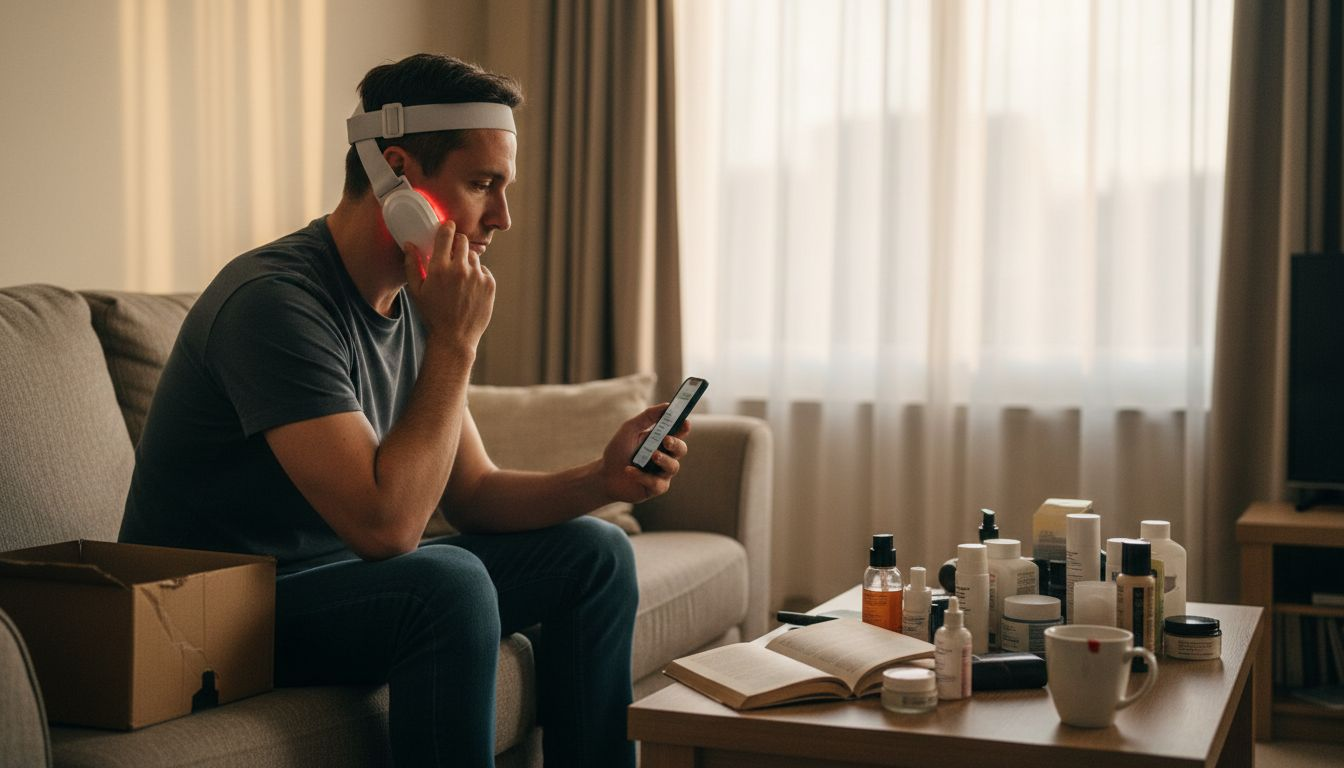
Pro Tip: Maintain consistent treatment schedules and combine LED and EMS therapies with proper hydration and skincare routines for optimal rejuvenation results.
Here is a comparative overview of LED and EMS facial devices to help users understand their unique benefits:
| Feature | LED Therapy Devices | EMS Therapy Devices |
|---|---|---|
| Main Action | Stimulates cellular activity | Tones and firms facial muscles |
| Targeted Concerns | Skin texture, inflammation | Laxity, muscle definition |
| Typical Sensation | Gentle warmth or tingling | Slight muscle contractions |
| Best For | Fine lines, hydration | Contour, lifted appearance |
| Frequency of Use | Several times weekly | 2-3 times per week |
Safety, Costs, and Legal Device Standards
Home-use aesthetic devices represent a rapidly evolving technological landscape, with stringent safety protocols and regulatory considerations. Multi-energy devices require comprehensive safety validation to ensure consumer protection and effective performance across different skin types and conditions.
Key Safety Considerations:
- CE certification standards
- FDA regulatory compliance
- Electrical safety testing
- Electromagnetic radiation limits
- Skin sensitivity evaluations
Cost Factors for Aesthetic Devices vary significantly based on several parameters:
- Technology complexity
- Research and development investment
- Manufacturing precision
- Treatment capabilities
- Brand reputation
Regulatory frameworks from European and American health agencies establish comprehensive guidelines for device performance, requiring manufacturers to demonstrate:
- Consistent therapeutic outcomes
- Minimal potential for adverse reactions
- Precise energy output controls
- Comprehensive user safety instructions
- Rigorous quality management systems
Pro Tip: Always verify a device’s regulatory certifications and read independent clinical studies before investing in any home-use aesthetic technology.
Common Mistakes and Effective Usage Tips
LED and EMS device treatments require precision and understanding to maximise skin rejuvenation benefits while avoiding potential complications. Learning the nuanced approach to these technologies helps users achieve optimal results and protect their skin’s health.
Common User Mistakes to Avoid:
- Applying devices on unclean skin
- Using incorrect intensity levels
- Neglecting recommended treatment durations
- Skipping skin preparation steps
- Inconsistent usage patterns
Effective Usage Guidelines:
- Thoroughly cleanse skin before treatment
- Apply conductive gel for better electrical contact
- Start with lowest intensity settings
- Gradually increase treatment duration
- Maintain consistent weekly treatment schedule
Proper device maintenance and understanding individual skin responses are crucial for successful LED and EMS therapy. Each skin type reacts differently, so personalised approaches that consider unique physiological characteristics will yield the most promising outcomes.
Pro Tip: Document your skin’s response after each treatment, tracking changes in texture, elasticity, and overall appearance to help refine your personalised skincare strategy.
Discover Non-Invasive Facelift Solutions with Professional LED Therapy
If visible signs of ageing such as wrinkles, sagging skin, or loss of facial volume concern you today, non-invasive LED therapy may offer a gentle place to start before considering RF, ultrasound or EMS treatments. This article highlights how LED devices stimulate collagen production and improve skin elasticity at the cellular level, without the heat, muscle stimulation or downtime associated with other non-surgical technologies. Addressing these key challenges with gentle yet effective light treatments allows you to restore your youthful glow in the comfort of your home and on your own schedule.
Experience the advanced technology behind clinically certified devices at PDT LED - Lumilux where you will find expertly engineered tools designed to revitalise your skin safely and effectively. By integrating these dermatologist-inspired devices into your routine you can enjoy the confidence of natural-looking, lasting improvements without the risks and downtime of surgery.
Take the next step towards radiant skin by exploring the full range of innovative treatments at Lumilux Limited. Visit PDT LED - Lumilux today to choose your ideal non-invasive facelift device. Start your journey now because youthful skin deserves cutting-edge care backed by science and safety.
Frequently Asked Questions
What are the benefits of non-invasive LED therapy?
Non-invasive LED therapy offers several benefits, including improved skin texture, reduced inflammation, enhanced collagen production, and increased hydration. It helps combat visible signs of ageing without the need for surgical intervention.
How does LED therapy work for skin rejuvenation?
LED therapy utilises specific wavelengths of light to penetrate the skin and stimulate cellular activity. This process activates fibroblast cells, increases collagen production, and promotes overall skin healing and regeneration.
How often should I use LED therapy devices for optimal results?
For optimal results, it is generally recommended to use LED therapy devices several times a week. However, the exact frequency may vary based on individual skin type and product instructions, so it’s essential to follow the manufacturer’s guidelines.
Is LED therapy safe for all skin types?
Yes, LED therapy is considered safe for all skin types. However, it is important to consult a qualified professional before beginning treatment, especially for individuals with specific skin concerns or conditions, to ensure personalised care and recommendations.