

How to Choose LED Therapy for Effective Skin Results
Choosing the right at-home LED therapy device can feel confusing when skin and hair needs are so personal. The technology appeals because it fits busy schedules and promises solutions for everything from acne to aging. LED light therapy targets concerns like breakouts, fine lines, redness, and even hair thinning using specific wavelengths for real cellular change. This guide walks you through each critical step toward a custom, effective LED routine that fits your skin or hair goals—so you only invest in what truly matches your needs.
Table of Contents
- Step 1: Identify Your Skin Or Hair Concerns
- Step 2: Research LED Wavelengths And Device Features
- Step 3: Evaluate Clinical Certifications And Safety
- Step 4: Compare Device Quality And User Experience
- Step 5: Test Results And Adjust Your Routine
Quick Summary
| Key Insight | Explanation |
|---|---|
| 1. Identify Primary Concerns | Know your main skin or hair issues to choose the right device effectively. Misalignment can lead to wasted time and money. |
| 2. Understand LED Wavelengths | Different wavelengths target specific concerns; red light for wrinkles, blue light for acne. Choose devices based on your needs. |
| 3. Ensure Clinical Certification | Look for FDA clearance or CE certification to guarantee safety and effectiveness of the device before purchasing. |
| 4. Evaluate Device Quality | Consider comfort, adjustable settings, and uniform light exposure in your device to ensure a positive user experience. |
| 5. Monitor Results Consistently | Track changes with photos and notes to assess your device’s effectiveness, adjusting your routine as needed every few weeks. |
Step 1: Identify your skin or hair concerns
Before you invest in any LED therapy device, you need to know exactly what you’re trying to fix. This might sound obvious, but most people skip this step and end up with a device that doesn’t address their actual problem. Your skin concern determines which wavelength you need, how often you should use the device, and whether you’ll actually see results. Think of it like treating acne with a wrinkle-targeting red light when blue light is what your skin is begging for. It simply won’t work the way you hope.
Start by examining your skin or scalp honestly. Are you dealing with active acne breakouts, or is it more about preventing future blemishes? Is your main frustration fine lines and loss of elasticity, or are you battling uneven skin tone and dark spots? Maybe your concern is hair thinning or slower hair growth. LED light therapy addresses various skin and hair concerns, from inflammation and bacterial infection to collagen stimulation. Different wavelengths penetrate at different depths, so identifying whether you have a surface-level issue like active acne or a deeper concern like wrinkles matters tremendously. If you’re experiencing redness, sensitivity, or post-inflammatory marks, that’s another category entirely. For hair concerns, are you seeing increased shedding, slower growth, or overall thinning? These details shape your entire treatment strategy.
Write down your top three skin or hair concerns in order of importance. Yes, actually write them down. This forces you to prioritize. You might think you care equally about wrinkles and acne, but if you’re honest, one probably bothers you more. That priority should guide your device selection. Red light therapy, for example, excels at addressing signs of aging like wrinkles and age spots, while blue light targets bacterial acne. You might eventually use multiple wavelengths, but for your first device, match it to your primary concern. Taking this diagnostic step now saves you months of frustration with a mismatch between your goals and your equipment.
Pro tip: Take photos of your skin or scalp in natural lighting with consistent angles and timing, then compare them weekly as you use LED therapy. This visual record reveals progress your eyes alone might miss, especially with subtle concerns like fine lines or early hair regrowth.
Step 2: Research LED wavelengths and device features
Now that you know what you’re treating, it’s time to understand the science behind the device you’ll be using. LED therapy works because different light wavelengths penetrate skin at different depths and trigger different biological responses. This isn’t magic, it’s physics. Red light behaves differently than blue light, and knowing the difference means the gap between disappointing results and actual transformation. When you’re comparing devices, wavelength should be your primary focus, not just brand name or price tag.
Let’s break down what actually matters. Red light wavelengths between 620 and 700 nanometers work best for anti-aging concerns, stimulating collagen production and improving skin elasticity. Blue light in the 405 to 420 nanometer range targets bacteria that cause acne, making it your go-to for breakout prone skin. Yellow light around 570 to 620 nanometers reduces redness and pigmentation, which is why people with rosacea or uneven skin tone gravitate toward it. Near-infrared light extending from 800 to 2500 nanometers penetrates deeper, supporting inflammation reduction and tissue repair. When you’re evaluating devices, check the specifications for the exact wavelengths offered. A device claiming to be “anti-aging” should specify red light. One marketed for acne should emphasize blue light. If the manufacturer won’t tell you the wavelength, that’s a red flag.
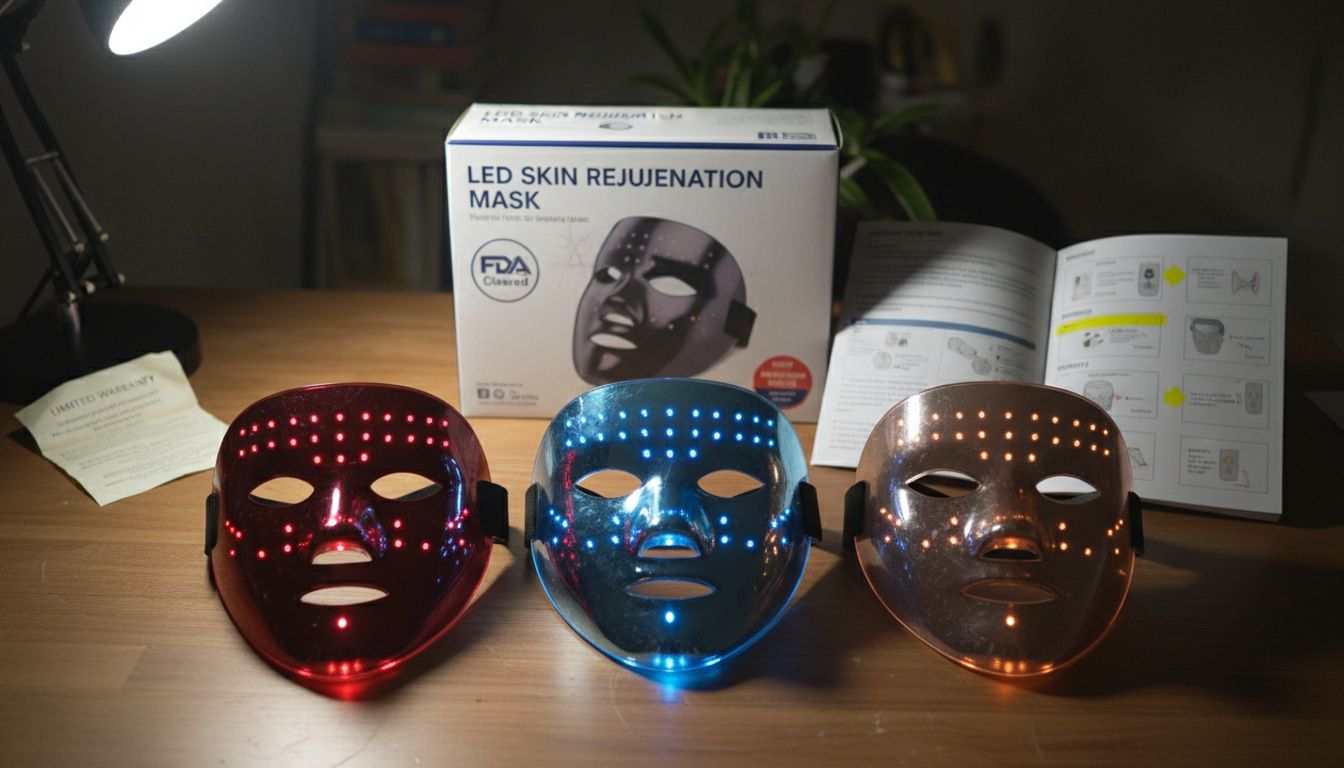
Here’s a quick guide to common LED wavelengths and their targets:
| Wavelength Range | Light Color | Primary Target | Typical Use Case |
|---|---|---|---|
| 620-700 nm | Red Light | Collagen & skin elasticity | Anti-aging, wrinkles |
| 405-420 nm | Blue Light | Acne-causing bacteria | Active acne, breakouts |
| 570-620 nm | Yellow Light | Redness & pigmentation | Rosacea, uneven skin tone |
| 800-2500 nm | Near-Infrared | Deep tissue inflammation | Repair, hair regrowth |
Beyond wavelength, pay attention to power output, measured in milliwatts per square centimeter, and the treatment duration recommended. A device with weak output will take longer to work, if it works at all. You’ll also want to consider whether the device matches your lifestyle. Do you want to wear a mask for 10 minutes, or would you prefer a handheld wand you can target specific areas? Some devices focus on face treatments while others work for scalp or hair concerns. Read actual reviews from people with your same skin concern, not just generic praise. Check whether the device is clinically tested and what results users report in realistic timeframes. Most meaningful improvements take 4 to 12 weeks of consistent use, so be skeptical of anyone claiming overnight transformation.
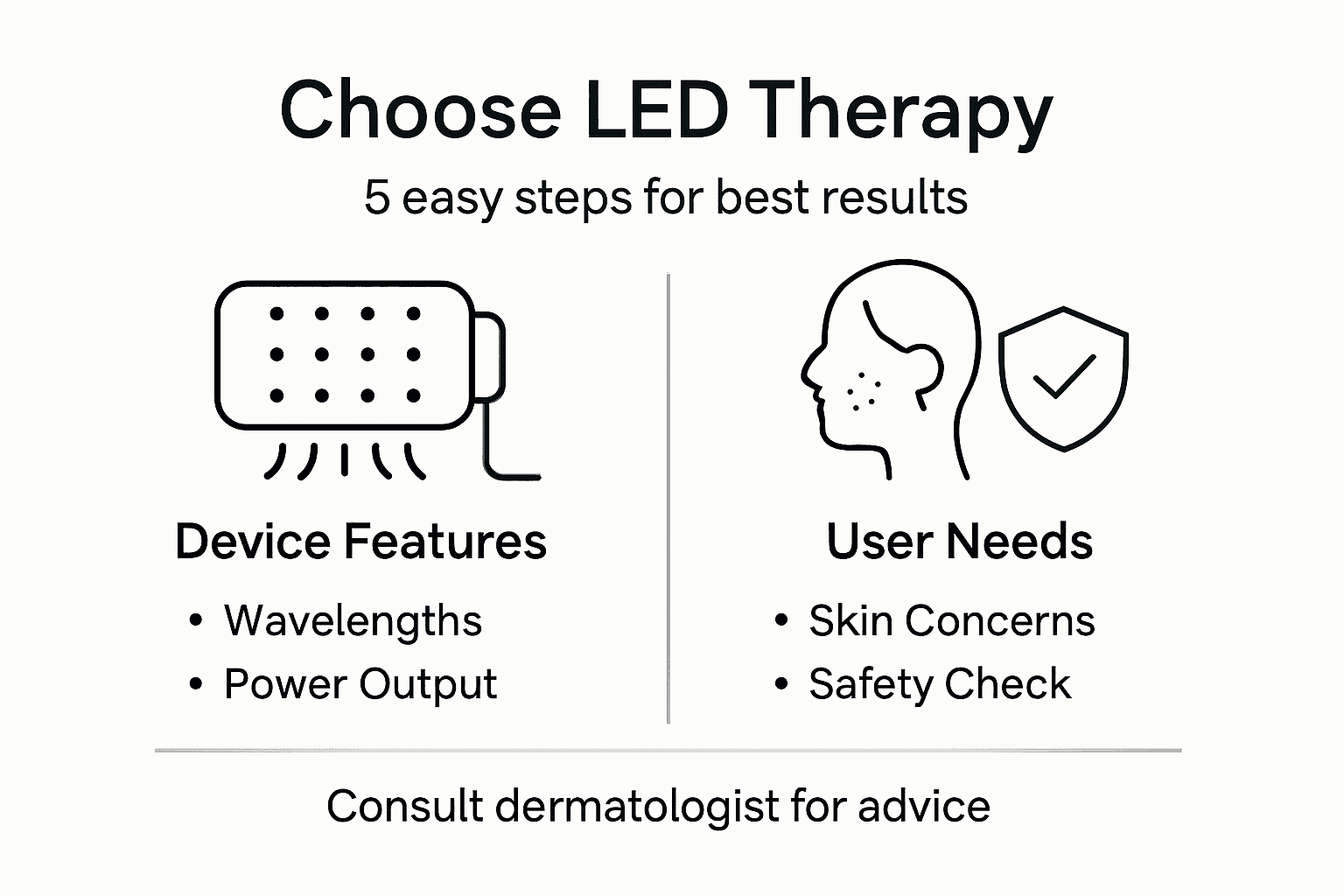
Pro tip: Create a comparison spreadsheet listing wavelengths, power output, treatment time, and price for your top three device options, then rank them by how well they match your specific concern rather than choosing based on appearance or marketing alone.
Step 3: Evaluate clinical certifications and safety
You’ve identified your concern and researched the science. Now comes the part that protects your investment and your skin. Clinical certifications and safety standards separate legitimate devices from ones that might waste your money or worse, damage your skin. This step takes maybe 15 minutes but could save you from serious regret. Before you buy, you need to know that the device has actually been tested and proven safe for home use.
Start by looking for FDA clearance on the product page or packaging. FDA clearance means the device has undergone evaluation and met standards for safety and effectiveness. This is not a guarantee it will work miracles for you specifically, but it does mean the manufacturer submitted evidence to a regulatory body and passed scrutiny. Look for the actual FDA clearance number if possible, not just vague claims about being “FDA approved.” Beyond FDA clearance, check for CE certification if you’re in Europe or other regional certifications depending on where you live. At-home LED devices meeting regulatory standards are generally safe when used correctly, but that last part matters. A device can be safe and still hurt you if you ignore the instructions. Read whether the manufacturer has published clinical studies on their specific device. Real companies back their claims with actual research, not just testimonials.
Another layer of credibility comes from dermatologist endorsement. Does a board certified dermatologist recommend this device? Have they tested it themselves? Check the brand’s website for any partnerships with skin specialists or research institutions. Read through customer reviews specifically from people in the medical field or those who mention consulting with dermatologists. Pay attention to whether the company addresses safety concerns directly. For instance, do they explain how to avoid eye exposure? Do they specify maximum treatment duration? Do they clarify that the device is not suitable for certain medications or conditions? Responsible manufacturers answer these questions upfront. If you email the company with safety questions and they respond poorly or ignore you, that’s telling. Finally, check the warranty. A company confident in their product offers solid coverage and easy returns. A 30-day money-back guarantee with no questions asked suggests they believe in what they’re selling.
Pro tip: Before purchasing, contact the manufacturer directly with one specific question about safety or your particular skin concern, and evaluate how thoroughly and quickly they respond, since customer service quality often reflects overall product quality and safety standards.
Step 4: Compare device quality and user experience
Now that you’ve narrowed down to devices that are certified and safe, it’s time to evaluate which one actually feels right for your daily life. A device with perfect specifications means nothing if you’ll hate using it. Quality matters on two levels. The device itself needs to deliver consistent results, and your experience using it needs to fit into your routine without friction. This is where most people make their final decision, and rightfully so.
Start by examining what “quality” actually means for LED devices. High-quality devices provide uniform light exposure, adjustable settings, and ergonomic design for consistent user comfort. Uniform light exposure means every part of your face or scalp gets the same intensity, not hot spots and dead zones. Adjustable settings let you customize intensity and duration based on your skin’s tolerance and your schedule. Ergonomic design matters more than you might think. A heavy facial mask that causes neck strain after five minutes becomes a device you avoid. A handheld wand with an awkward grip makes treating the back of your scalp miserable. Read reviews from real users about comfort during treatment. How does the device feel against skin? Does it get hot? Are the straps adjustable? Can you see what you’re doing if you’re treating your face? These practical details determine whether you’ll actually stick with the 12-week protocol needed to see real results.
Next, consider treatment duration and how it fits your life. Some devices require 10 to 20 minutes daily, while others work in five minute sessions three times weekly. Neither is inherently better, but one might align with your schedule better than the other. A busy professional might prefer quick sessions, while someone with a flexible morning routine might not mind a longer treatment. Look into the support resources too. Does the brand offer a user manual that actually explains things clearly? Is there customer support if you have questions? Do they provide guides on expected timelines and how to troubleshoot issues? Some companies go the extra mile with video tutorials, email support, and community forums. Others leave you figuring things out alone. Portability matters if you travel frequently. Can you pack it safely? Does it work with different electrical systems? Finally, check the warranty length and what it covers. A three-year warranty signals confidence in build quality. A one-year warranty still works but suggests less durability testing.
Compare these essential device quality factors at a glance:
| Quality Factor | Why It Matters | Signals Good Design |
|---|---|---|
| Uniform light output | Ensures even, effective treatment | No hot spots, full coverage |
| Adjustable settings | Customizes comfort and results | Multiple intensity, timer |
| Ergonomic fit | Supports regular, easy use | Lightweight, adjustable shape |
| Clear user guidance | Increases effectiveness and safety | Comprehensive manual, support |
| Warranty length | Reflects manufacturer confidence | 1-3 years, hassle-free return |
Pro tip: Watch actual user videos on social media or YouTube from people with your skin type using your top device choices, paying special attention to how they handle it, their real results at different time intervals, and whether they mention problems or adjustments they made.
Step 5: Test results and adjust your routine
You’ve made your purchase and started using your LED device. Now comes the part where patience meets strategy. Most people give up too early because they expect overnight transformation, but skin changes happen at a cellular level and take time to become visible. The first four to six weeks are about establishing consistency and baseline observation. This is when you test whether your routine actually fits your life and whether your device is delivering what you need.
Start tracking your results from day one, even if nothing looks different yet. The photos you took earlier become your comparison baseline. Take new photos every two weeks under the same lighting conditions, same angle, same time of day if possible. This removes the emotion from evaluation. What you see in the mirror one morning, influenced by lighting and mood, is not the same as comparing standardized photos side by side. By week four, you should start noticing something. Acne might be reducing in frequency. Redness might be calming. Skin texture might feel smoother even if you cannot see dramatic changes. If you see absolutely nothing by week six, that signals a potential problem. Either the device is not suited to your skin, you’re not using it correctly, or your expectation timeline needs adjustment. Before you abandon it, revisit your treatment protocol. Are you using the recommended frequency? Are you treating the right areas? Have you adjusted intensity as your skin adapted? Some people start at lower intensity and need to increase it by week three. Others need to drop frequency because their skin is becoming irritated.
Adjustment is normal and necessary. If your skin feels irritated, reduce frequency or duration. If you see no change by week eight, consider increasing intensity or adding a complementary wavelength if your device allows it. Document everything in a simple spreadsheet or notes app. What did you do that week, how did your skin respond, what will you change next week. This transforms random observations into actionable data. By week twelve, you’ll have enough information to know whether this device is working for you and exactly how to optimize your routine. If results plateau after 16 weeks, your skin might have adapted and you could take a one to two week break before resuming, or you might need to incorporate a second device targeting a different wavelength for enhanced results.
Pro tip: Set weekly phone reminders for treatment time and monthly reminders to take comparison photos, then schedule a review date at week six to assess whether adjustments are needed before committing to the full 12-week cycle.
Unlock Targeted Skin and Hair Solutions with Expert-Grade LED Devices
Choosing the right LED therapy device can feel overwhelming especially when you want effective results for concerns like wrinkles, acne, or hair thinning. The challenge is matching your specific skin or hair issues with the exact light wavelength and device features that deliver visible transformation. At Lumilux Limited, we understand how frustrating it is to invest time and effort without seeing progress. That is why we offer a curated range of thoughtfully engineered devices designed to address your unique needs with precision and safety.
Explore our PDT LED collection for powerful red and blue light therapies proven to reduce inflammation, combat acne, and promote collagen production. For those struggling with hair health, our Hair Accessories deliver innovative scalp stimulation and growth support. Backed by dermatologist-inspired engineering and expert guidance, these devices fit seamlessly into your routine for sustained improvement. Start transforming your skin and hair today by visiting Lumilux Limited and find the solution perfectly tailored to your goals. Act now to experience high-quality LED therapy that finally delivers real results.
Frequently Asked Questions
How do I identify the right LED therapy for my skin concerns?
To identify the right LED therapy for your skin concerns, start by assessing your specific issues, such as acne, fine lines, or uneven skin tone. Write down your top three concerns and prioritize them, as this will guide your device selection.
What are the different LED wavelengths, and how do they impact my treatment?
Different LED wavelengths penetrate the skin at varying depths and target specific concerns. For example, red light (620-700 nm) is effective for anti-aging, while blue light (405-420 nm) is aimed at treating acne. Research these wavelengths to choose a device that aligns with your primary concern.
How can I ensure the LED device I choose is safe and effective?
To ensure safety and effectiveness, look for devices that have FDA clearance and other relevant certifications. Verify that the manufacturer provides clinical studies and endorsements from dermatologists, as this indicates a product that has been rigorously tested and backed by professionals.
What features should I look for in a high-quality LED therapy device?
When evaluating LED therapy devices, check for uniform light exposure, adjustable settings, and ergonomic design. High-quality devices should deliver consistent results while fitting seamlessly into your routine, allowing for comfortable and effective treatments.
How long before I start seeing results from my LED therapy device?
Typically, most users start noticing changes in their skin within 4 to 6 weeks of consistent use. Keep a visual record by taking comparison photos every two weeks to track progress and make adjustments to your routine as needed.
What should I do if I don’t see results after several weeks of using my LED device?
If you don’t observe any changes after 6 to 8 weeks, revisit your treatment frequency and intensity settings. Consider decreasing or increasing your treatment duration and ensure you are addressing the correct areas effectively to optimize your results.